
This original template separates tool use from outcomes: frequent use is not evidence of benefit. Essex’s human-impact orientation informs the principle; our indicators are not a published lab scale.
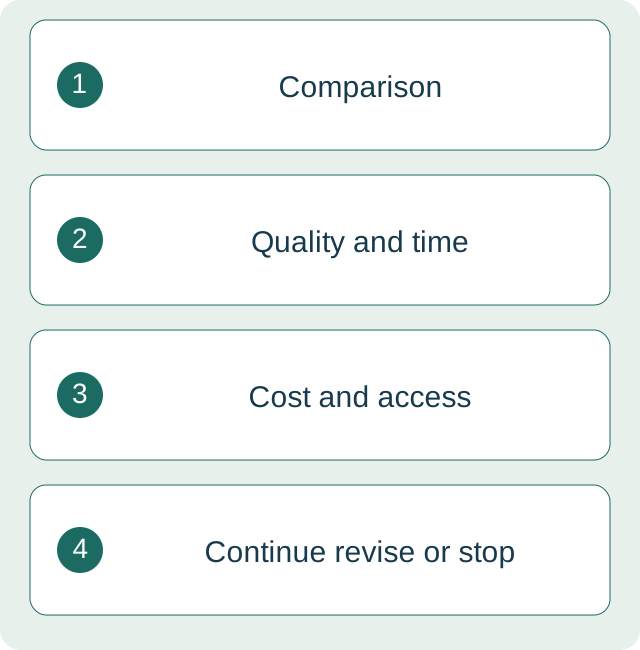
Set the comparison first
Define the task, current method and reviewer. Use comparable tasks or a balanced comparison; do not compare an expert with a beginner and call the difference a technology effect. Record differences in conditions.
Completion
Did the user complete the defined task? Record total and successful attempts and the success criterion.
Quality
Count serious errors and corrections after review separately.
Time
Minutes for preparation, review and execution; the median can help with small groups.
Cost
Subscription, connection, printing and work time; specify currency and period.
Access
Could the person work on paper or without a phone? Record barriers without unnecessary personal attributes.
User feedback
What helped? What made the task harder? Would you choose this method again?
Worked example with invented data
Preparing a worksheet took 30 minutes with the usual method and 18 minutes with AI assistance, including review in both. The illustrative saving is 12 minutes, or 40% of comparison time. The assisted draft needed three corrections versus one; neither retained a serious error after review. Decision: run another trial before expanding. Time savings alone are insufficient. These invented training values are not DJAIRI results or causal evidence.
Decision and follow-up
- Continue when task, quality and access meet the predefined limits.
- Revise manageable barriers; name an owner and review date.
- Stop for harm, data exposure or a serious error, addressing the incident before retrying.
- Collect minimally and keep worksheets locally under participant agreement; do not upload them here.
Practice workbook
Read the steps here, or download the workbook for offline use. Your responses are not uploaded to this website.
Last reviewed: 7 October 2026 · Version 1.0
Sources and scope of reuse
Sources accessed 7 October 2026. Publication dates are not stated on the overview pages and are not inferred. Text, examples, templates and diagrams are original DJAIRI work. Links support the specific ideas identified above; they do not imply partnership or endorsement. Third-party images and extended passages are not reproduced.