International practice is a starting point for understanding. We then design for local language, resources and circumstances. A result elsewhere is not evidence of a result here; innovation is more than buying a tool.
What informs the approach?
Stanford HAI and Essex describe human-oriented design. Humanitarian AI Advisory presents use-case exploration and a roadmap for adoption. Turning those orientations into a short experiment card is DJAIRI’s own work.
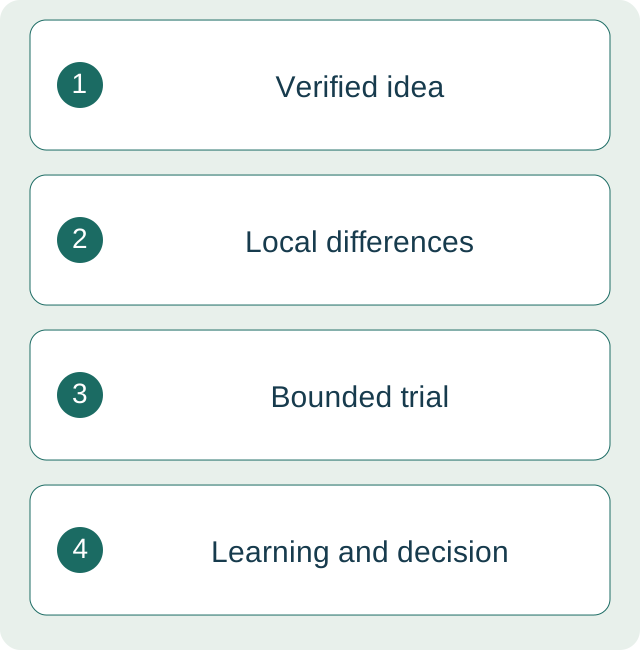
Responsible adaptation card
- Identify the specific source idea and link; do not attribute unpublished steps to it.
- Describe local differences in language, time, equipment, environment and users.
- Design a bounded trial and a non-AI alternative.
- Name the reviewer, benefit measure and stop condition.
- Record learning, then revise, stop or expand based on evidence.
Three designs ready for testing
- A learning activity that practices explaining a decision
- A water and vegetation scenario notebook
- Community listening with minimal data
These are proposed designs, not implementation results or operational AI tools. Start on paper with human review, adding technology when it demonstrates value.
Last reviewed: 7 October 2026 · Version 1.0
Sources and scope of reuse
Sources accessed 7 October 2026. Publication dates are not stated on the overview pages and are not inferred. Text, examples, templates and diagrams are original DJAIRI work. Links support the specific ideas identified above; they do not imply partnership or endorsement. Third-party images and extended passages are not reproduced.